Ongoing
Location: Morang, Jhapa and Sunsari
Partner/Donor: Opportunity International Australia (OIA) and Global Affairs Canada (GAC)
Apr 01, 2025
- Mar 30, 2030
Jeevan Bikas Samaj (JBS), in partnership with Opportunity International Australia and funded by Global Affairs Canada (GAC), is implementing...
Jeevan Bikas Samaj (JBS), in partnership with Opportunity International Australia and funded by Global Affairs Canada (GAC), is implementing the Women Empowered through Community and Resilience-Enhancing Health Systems in South Asia (WE CARE) project. This initiative aims to improve the health and resilience of nearly 800,000 people in Nepal by 2030, with a special focus on women and girls in rural and marginalized communities.
Currently, WE CARE is being implemented across 10 rural municipalities of Morang District. Building on this foundation, the project is now in the process of expanding to Jhapa (5 rural municipalities) and Sunsari (6 rural municipalities), ensuring wider coverage across Koshi Province.
In Morang, pilot studies revealed that women and adolescent girls face multiple barriers to healthcare—limited mobility, stigma around reproductive health, economic hardship, and low health literacy. Many rely on pharmacies or private clinics due to gaps in government health services. As one section of the study notes, “most of the women… had regular backache and other minor reproductive issues and they had taken medicine either from the local pharmacy or had visited a private clinic.”
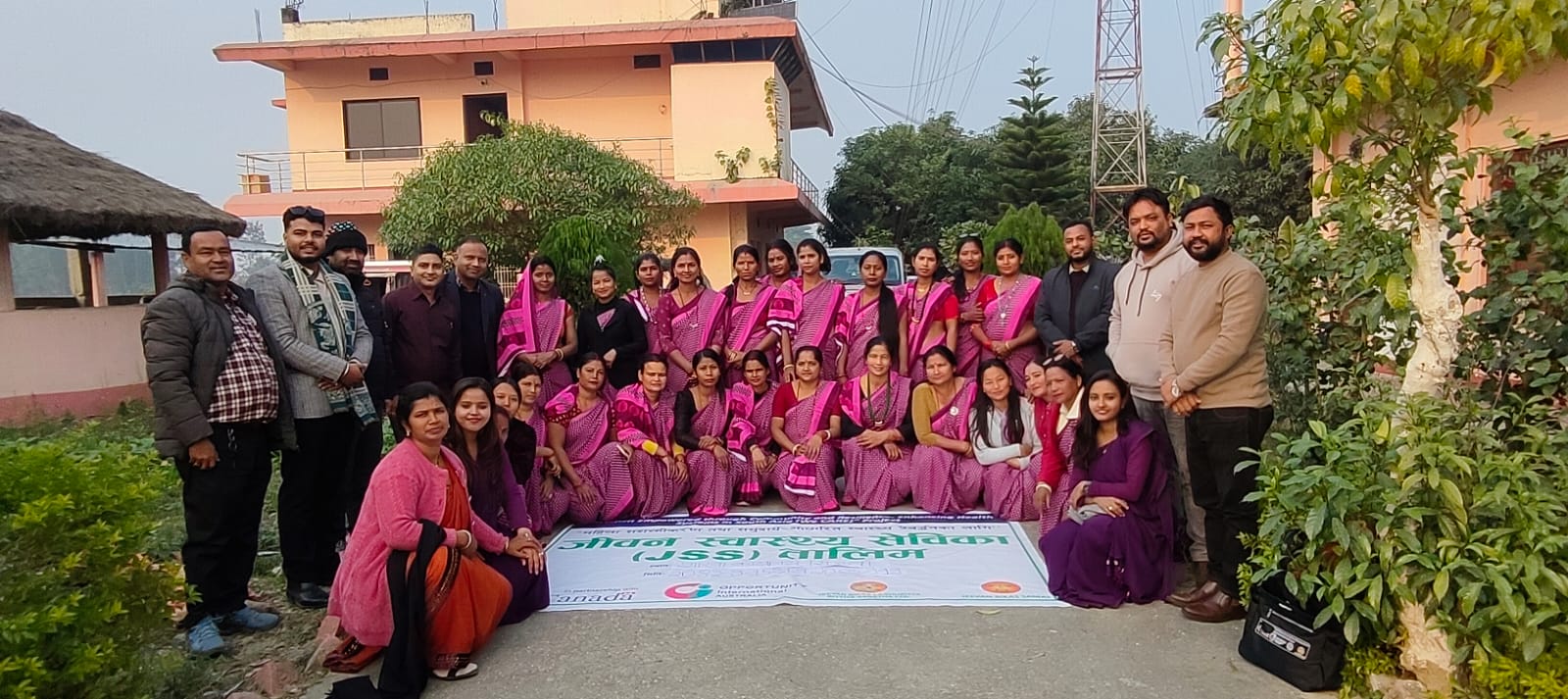
To address these challenges, WE CARE is mobilizing Jeevan Swasthya Sebika (JSS)—trusted female community health workers trained to deliver primary health services, raise awareness, and connect families to formal health facilities. Their role is pivotal: from health education and referrals to community mobilization and data collection, they act as the bridge between underserved communities and the health system.
The project also integrates digital healthcare solutions—teleconsultations, mobile health apps, and awareness campaigns through social media and local outreach. By combining health education, improved access to primary care, and digital innovation, WE CARE is building a sustainable model of resilience.
Beyond health, WE CARE recognizes the link between women’s well-being and economic empowerment. Through JBS’s microfinance network, women gain access to livelihood support, loans, and training, ensuring that health interventions are reinforced by financial resilience.